
Planning a renovation or new build in Kelowna? You're working in one of Canada's most unique climates. The Okanagan's dry air, dramatic temperature swings, and low humidity year-round create conditions that affect how drywall behaves during installation and decades after. If your installer treats a Kelowna project the same way they'd approach a coastal BC job, you're heading for problems. Understanding how drywall installation Kelowna projects need to account for local conditions saves you from callbacks, cracks, and compromised finishes.
Drywall installation in Kelowna requires adjusting for the region's arid environment, seasonal extremes, and specific moisture challenges that differ dramatically from Vancouver or Victoria.
Why the Okanagan Climate Changes Everything for Drywall
Kelowna sits in a semi-arid climate zone. Average relative humidity hovers between 40-60% in summer and drops lower in winter when furnaces run constantly. Compare that to coastal BC, where humidity regularly exceeds 70-80%, and you see why drywall behaves differently here.
Moisture Content in Materials
Drywall sheets absorb and release moisture based on ambient humidity. When you bring materials from a supplier's warehouse into a Kelowna home in January, they need time to acclimate. Rushing installation before sheets adjust to your home's dry winter air leads to shrinkage after hanging. You'll see fastener pops and seams that telegraph through paint within months.
We store materials on-site for 24-48 hours before installation. That window lets sheets equilibrate to your home's specific conditions. It's a step many contractors skip, and homeowners pay for it later.
Temperature Swings and Expansion
Kelowna summers hit 35°C. Winter nights drop to -10°C or colder. Those swings cause building materials to expand and contract. Drywall installed during a cold snap behaves differently once summer heat arrives.
The solution isn't avoiding certain seasons (you'd never get projects done). It's understanding how to detail joints, position fasteners, and choose compounds that flex with movement. Services include these climate-specific techniques as standard practice, not upsells.
Basement Considerations in the Okanagan
Basements in Kelowna behave nothing like basements on the coast. You're not fighting constant moisture infiltration. Instead, you're managing a space that stays cool and stable year-round while the floors above swing through temperature extremes.
That difference matters for vapour barrier placement and insulation strategy. Install drywall in a Kelowna basement the same way you would in Surrey, and you risk trapping moisture where it doesn't belong. Building science for arid climates puts vapour barriers on different sides of the wall assembly than humid climates require.
Seasonal Timing and Why It Matters for Your Project
Contractors who don't communicate or show up on schedule frustrate homeowners across every trade. For drywall, timing isn't just about calendar availability. It's about working with or against Kelowna's seasonal conditions.
Winter Installation Challenges
Cold, dry air speeds up mud drying times, which sounds like a benefit until you realize it prevents proper curing. Compound that dries too fast doesn't bond correctly and develops micro-cracks that show up later.
We run humidifiers during winter finishing work. It seems counterintuitive in a dry climate, but controlled humidity in the 40-50% range during the mud and tape phase produces stronger, longer-lasting results. Your home's furnace pulls moisture out of the air constantly. Without adding it back during finishing, compounds cure too fast.
Summer Advantages
Warmer temperatures and slightly higher ambient humidity create ideal conditions for finishing work. Compounds flow better, dry at controlled rates, and sand predictably.
But summer also means longer project waitlists. Kelowna homeowners and builders pack renovation schedules between May and September. If you're flexible on timing, shoulder seasons (April, October) offer the best combination of favorable conditions and availability.
Wildfire Season Considerations
Kelowna's wildfire risk affects more than air quality. Smoke infiltration during installation can contaminate drywall surfaces before finishing. We monitor air quality indexes and adjust schedules when particulate levels spike. Once compound is applied in smoky conditions, you've locked contaminants against the substrate. They'll bleed through paint or show as discoloration later.
According to Natural Resources Canada air quality guidelines, prolonged exposure to wildfire smoke affects both worker safety and material performance during finishing stages.
Material Choices That Perform in Low-Humidity Environments
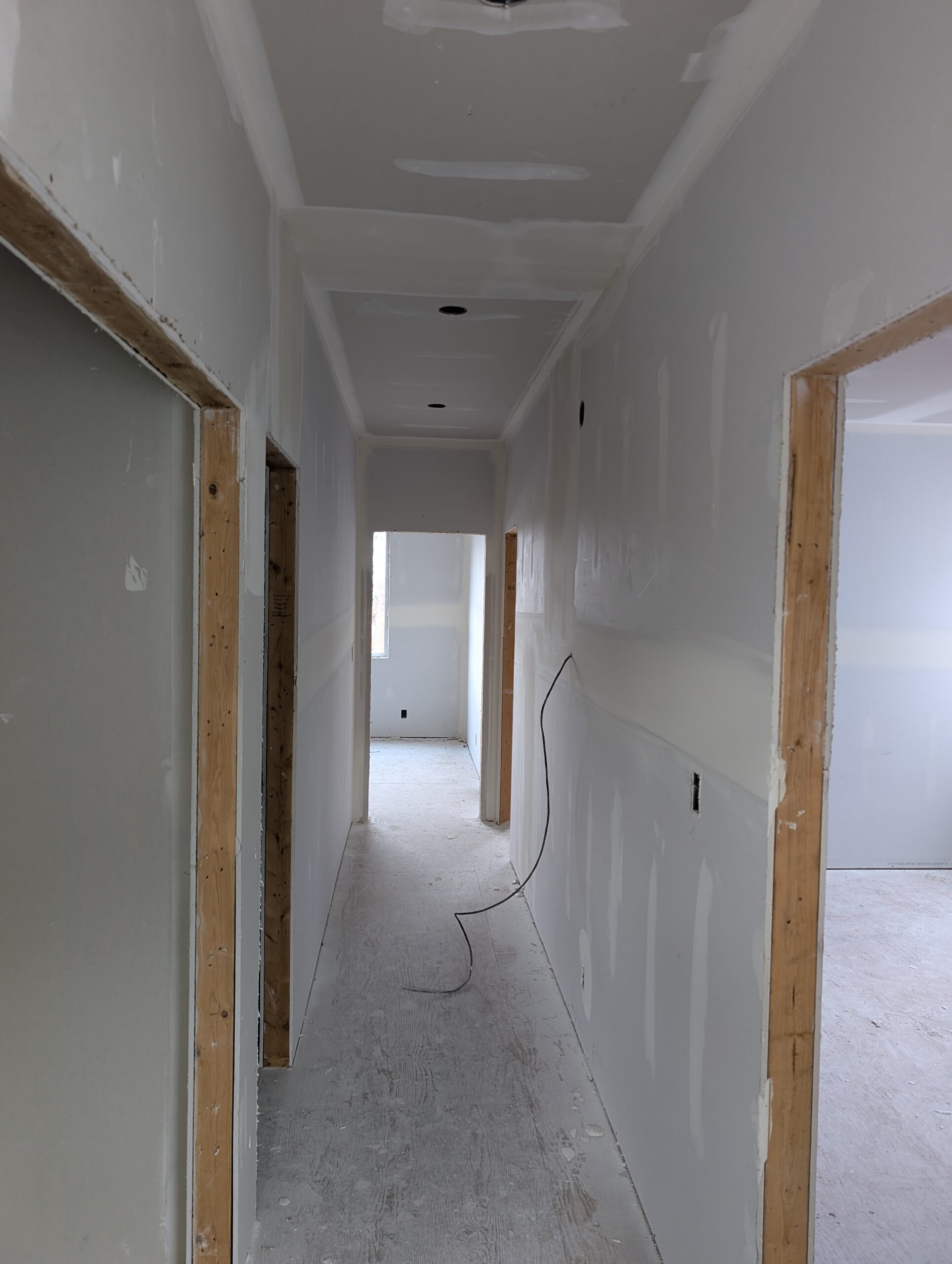
Not all drywall products perform equally in Kelowna's climate. Choosing the right materials prevents problems before installation begins.
Standard vs. Moisture-Resistant Drywall
Coastal installers default to green board or purple board in bathrooms and kitchens. In Kelowna, standard drywall handles most interior applications without issue because ambient moisture stays low year-round.
That doesn't mean you skip moisture-resistant options entirely. We still recommend them in bathrooms with poor ventilation or spaces where steam accumulates. But you're not fighting the constant humidity battles that coastal homes face.
Fire-Rated Drywall and Okanagan Building Codes
Wildfire risk means Kelowna building codes emphasize fire-safe construction. Type X drywall (fire-rated) appears in more applications here than in lower-risk regions. Garages, utility rooms, and any wall adjacent to high-heat sources require fire-rated sheets.
Using the right fire rating isn't optional. Inspectors check, and insurance adjusters look for code compliance after incidents. We track code updates specific to Drywall contractor in West Kelowna, Drywall contractor in Peachland, and Drywall contractor in Lake Country jurisdictions, where requirements sometimes differ from Kelowna proper.
Compound Selection for Arid Climates
All-purpose joint compound works differently in 30% humidity than it does at 70%. We adjust mix ratios and choose compounds formulated for low-moisture environments. Lightweight compounds that perform beautifully on the coast can dry too fast here, becoming brittle and prone to cracking.
Sanding also changes. Dust control becomes more critical in dry climates because fine particles stay airborne longer. We use HEPA-filtered sanders and seal off work areas with plastic barriers on every job. It's part of our commitment to leaving your home cleaner than we found it.
Why Local Expertise Prevents Expensive Callbacks
A contractor who learned their trade in Vancouver brings different assumptions than someone who's completed hundreds of projects in the Okanagan. Climate-specific knowledge shows up in dozens of small decisions that collectively determine whether your drywall lasts five years or fifty.
Vapor Barrier Placement
Building science puts vapour barriers on the warm side of insulation in heating-dominated climates. For Kelowna, that means inside the wall cavity, not outside. An installer who doesn't understand arid-climate building science might place barriers incorrectly, trapping moisture where it causes mold and rot.
We integrate with your insulation contractor to verify barrier placement before hanging sheets. It's a coordination step that prevents discovering problems during a future renovation when walls open up.
Fastener Schedules and Spacing
Dry air causes more shrinkage in framing lumber. That movement translates to drywall sheets. Proper fastener spacing and placement prevents sheets from pulling away from studs as lumber shrinks through its first heating season.
We adjust fastener schedules based on whether framing is kiln-dried lumber or engineered products. Each behaves differently in Kelowna's low humidity, and your fastener pattern needs to account for it.
Insulation Integration
Okanagan winters demand good insulation, but over-insulating without proper vapour control creates problems. We coordinate drywall installation with insulation contractors to ensure batts or spray foam fully fill cavities without compressing, which reduces R-value and creates cold spots that lead to condensation.
Your about us page explains how owner Boyd Hinch personally oversees coordination between trades on every project. That hands-on approach prevents the miscommunication that causes callbacks.
How Heating Season Affects Finishing Timelines
Kelowna's heating season runs October through April. Furnaces strip moisture from indoor air, creating conditions that speed compound drying but require careful management.
Controlled Drying Prevents Cracking
Each coat of mud needs to dry completely before the next application, but drying too fast weakens bonds. We schedule multiple thin coats rather than fewer thick coats, and we control drying rates with temporary humidity adjustments.
Rushing finish work to meet aggressive timelines produces walls that look good at handover but develop hairline cracks within months. We communicate realistic timelines upfront, factoring in Kelowna's seasonal conditions, so you know what to expect.
Sanding and Dust in Dry Air
Dust becomes a bigger issue when humidity drops. Fine particles from sanding stay suspended longer, travel farther, and infiltrate more spaces. Floor protection and dust control aren't optional steps on our projects.
We use plastic sheeting to seal work areas, HEPA-filtered tools for sanding, and negative air machines on large projects. You shouldn't find drywall dust in your kitchen when we're working in your basement. That level of care separates professional crews from contractors who leave mess behind.
Paint-Ready Timelines
Painters need fully cured drywall before applying primer. In Kelowna's dry winters, compound may feel dry to the touch within hours, but full cure takes longer. We schedule handoff to painters based on actual cure times, not surface feel.
If you're coordinating trades yourself, expect 48-72 hours between final sanding and primer in winter, slightly less in summer. Rushing that window causes paint to bubble or fail adhesion tests.
Frequently Asked Questions
Does Kelowna's dry climate mean I can skip moisture-resistant drywall in bathrooms?
Not entirely. While Kelowna's low ambient humidity reduces moisture risk compared to coastal BC, bathrooms still generate steam and localized humidity. We recommend moisture-resistant drywall in bathrooms with poor ventilation or heavy use. Well-ventilated powder rooms with exhaust fans often perform fine with standard drywall. Your specific layout and ventilation determine the right choice.
How long should drywall materials sit on-site before installation in Kelowna?
Minimum 24 hours, ideally 48. Sheets need time to equilibrate to your home's humidity and temperature. Materials delivered in winter from a warmer warehouse will shrink as they acclimate to your heated, dry interior air. Installing immediately risks fastener pops and seams that telegraph through paint. We build acclimation time into every project schedule.
Can I install drywall in Kelowna during wildfire season?
Yes, with precautions. We monitor air quality and pause finishing work when particulate levels exceed safe thresholds. Hanging sheets during smoky conditions is generally fine, but applying compound in heavy smoke risks locking contaminants against surfaces. We adjust schedules based on real-time air quality data and communicate changes as conditions evolve.
Why do some contractors say winter is bad for drywall work in Kelowna?
Winter's low humidity speeds compound drying, which can prevent proper curing if not managed. Contractors without climate-specific experience may struggle with cracking and weak bonds. However, winter installation works beautifully when you control humidity during finishing phases. We run humidifiers and adjust compound choices to match seasonal conditions. Winter projects aren't inherently problematic; inexperienced contractors are.
Ready to Start Your Drywall Project with Local Kelowna Experts?
Kelowna's climate demands installers who understand how arid conditions, seasonal temperature swings, and low humidity affect every phase of drywall work. From material acclimation through final sanding, local expertise prevents the callbacks and cracks that come from treating Okanagan projects like coastal jobs. Boyd Hinch and the Brawler Drywall team bring years of Kelowna-specific experience to every installation, coordinating with trades, monitoring seasonal conditions, and delivering walls that perform for decades. Book a consultation with Kelowna drywall experts who understand local conditions and deliver the dependable, quality results your project deserves. Call 250-212-3966 or visit contact to discuss your timeline and get a free quote tailored to your home's specific needs.