
Whether you’re building a new room, finishing a basement, or upgrading a space, knowing how to install drywall is a foundational skill for DIYers and professional contractors. A well-done drywall job not only supports a room’s visual aesthetics but also plays a crucial role in insulation and soundproofing. While the process might seem daunting initially, breaking it down into simple, manageable steps makes it highly achievable.
This drywall installation guide walks you through each process stage from measuring and cutting to fastening and finishing. With the right tools, preparation, and mindset, your walls will be smooth, firm, and paint-ready in no time.
Tools and Materials You’ll Need
Before starting your step-by-step drywall installation, it’s essential to assemble all the tools and supplies you’ll need. This will save time, keep your workflow uninterrupted, and help avoid unnecessary mistakes.
Essential tools:
- Drywall sheets (choose 1/2″ thick for walls, 5/8″ for ceilings)
- Tape measure
- T-square or drywall square
- Utility knife with extra blades
- Drywall saw or rotary cutout tool
- Drywall screw gun or power drill with clutch
- Drywall screws or nails
- Joint compound (aka “mud”)
- Drywall tape (paper or mesh)
- Putty knives (6″, 10″, and 12″)
- Sanding sponge or pole sander
- Dust mask and eye protection
If you’re working on ceilings, consider renting a drywall lift. It’s a back-saver and improves precision.
Step 1: Measure and Plan
The first and most critical part of the job is careful planning. Take detailed measurements of the area you plan to cover. Mark all the electrical boxes, switches, plumbing cutouts, and window or door openings.
A good layout ensures:
- Minimal waste of drywall sheets
- Fewer seams to tape and mud
- Better structural stability
DIY drywall installation tips:
- Begin from one corner and move horizontally.
- Use a chalk line to keep edges level.
- Account for ceiling height before purchasing drywall sheet lengths.
By ensuring accurate measurements, you’ll cut down on rework and achieve a cleaner, more professional finish.
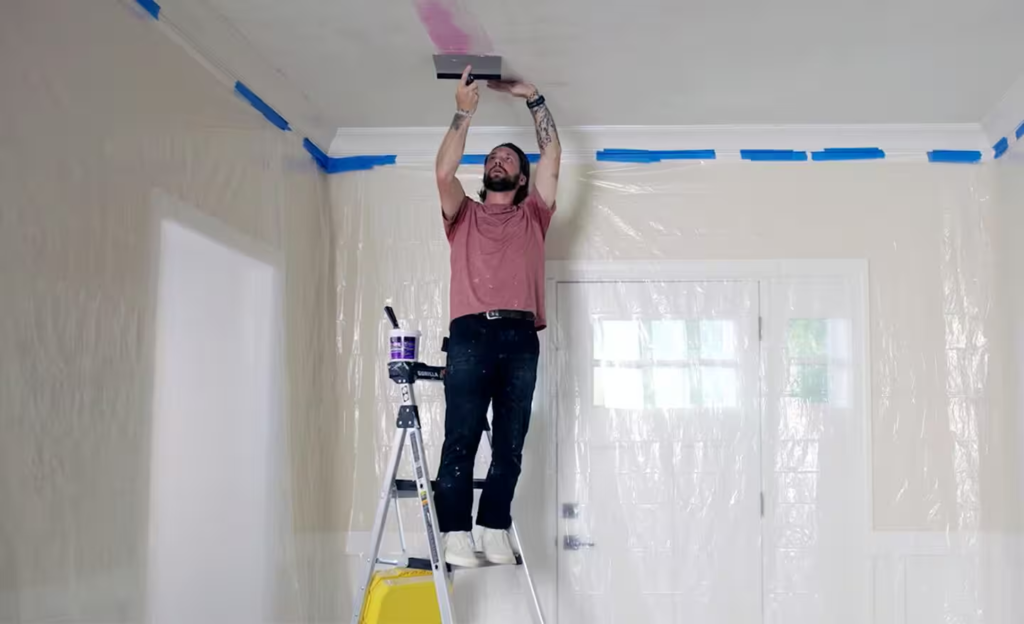
Step 2: Cut the Drywall Sheets
Once measured, score the drywall using a utility knife and T-square. Apply firm pressure to cut through the front paper layer. Snap the board along the score line and cut the back paper to separate the pieces. Use a drywall rasp to smooth any rough edges.
For outlets or switches:
- Use a drywall saw for rectangles.
- Use a rotary cutout tool for speed and precision.
Pro cutting tips:
- Always cut with the finished side facing up.
- Make outlet cutouts slightly smaller for tight fits.
- Wear gloves to prevent paper cuts and irritation from drywall dust.
The better your cuts, the fewer gaps you’ll need to fill later.
Step 3: Secure Drywall to Studs
With drywall sheets pre-cut, position them against the wall studs and fasten using drywall screws. Begin from the center of the sheet and work outward to avoid bowing or unevenness.
Perfect fastening:
- Space screws 12–16 inches apart along studs.
- Sink screw heads slightly below the surface, but don’t break the paper.
- For ceilings, stagger the joints like bricks for structural strength.
- If installing over existing drywall, use longer screws to reach the studs.
Use a drywall lift or enlist a helper to hold sheets in place for larger rooms or ceilings. Always double-check stud alignment before fastening.
Step 4: Tape and Mud Joints
Your craftsmanship shows in the taping and mudding phase. After securing your sheets, it’s time
to hide the seams and screw heads.
- Apply a thin coat of joint compound over the seam.
- Press drywall tape into the compound using a 6-inch taping knife.
- Smooth it out to remove bubbles.
- Let it dry, then apply a second, wider coat using a 10-inch knife.
- Apply a third coat using a 12-inch knife to blend edges smoothly.
Feathering the edges with each coat helps create an invisible seam once painted.
Important tips:
- Use paper tape for flat seams and mesh tape for corners.
- Let each layer dry for at least 24 hours.
- Keep your tools clean to avoid dried chunks ruining your finish.
This process may seem tedious, but it is essential to achieving a smooth, seamless appearance.
Step 5: Sanding and Finishing Touches
Once your final mud layer is completely dry, it’s time to sand. Use a fine-grit sanding sponge or pole sander to lightly smooth out the surface. Pay special attention to edges where the compound meets drywall.
Safety and finesse:
- Wear a mask and goggles to protect from dust.
- Use a work light to check for imperfections or raised edges.
- Wipe walls with a damp cloth before priming to remove dust.
At this point, your wall is ready for primer and paint, or texture if desired. Consider using a drywall primer-sealer to prepare the surface for final decoration.

Common Mistakes to Avoid
Even experienced DIYers can make simple mistakes that lead to extra work hours.
Here’s what to avoid:
- Overdriven screws: Break the paper and weaken the hold.
- Poor taping technique: Leads to visible seams and bubbling.
- Skipping the primer: Paint won’t adhere evenly, and imperfections will show.
- Rushing the drying process increases the risk of cracking or shrinking mud.
Take your time during each phase to prevent these common pitfalls.
Conclusion: Mastering How to Install Drywall
By now, you’ve learned how to install drywall from initial planning to the final sanding stage. The process may seem intensive, but each step ensures a durable, clean, and professional result.
To recap this step-by-step drywall install:
- Measure and cut precisely.
- Secure panels properly to prevent sagging.
- Take your time mudding and sanding for a flawless finish.
Whether you’re renovating a basement or building new walls, these DIY drywall installation tips will help you work confidently and avoid costly mistakes.
Do you need expert help or full-service drywall installation? Trust the team at Brawler Drywall for fast, reliable, and high-quality results in every project.
FAQs
1. How many drywall sheets do I need for a standard room?
Calculate the square footage of your walls and ceilings, then divide by the square footage of your drywall sheets. Don’t forget to account for waste (usually 10–15%).
2. Is there a difference between green board and standard drywall?
Yes. The green board is moisture-resistant and ideal for bathrooms, laundry rooms, and basements. Standard drywall is best for dry areas like bedrooms and living spaces.
3. Can I paint directly over drywall without priming?
No. Raw drywall absorbs paint unevenly. Always use a primer to seal the surface and provide better paint adhesion.
4. How long should I wait after mudding before sanding?
At least 24 hours per coat. Drying times vary depending on humidity and ventilation.
About Author
Brawler Drywall is one of the best Drywall service providers in Kelowna, BC. It provides Drywall Installation, Repair, finishing and texturing, popcorn removal services in the area with a reputation.
Website: https://brawlerdrywall.ca/
Office address: Kelowna, British Columbia
Email: boydhinch@gmail.com
Phone: 250-212-3966